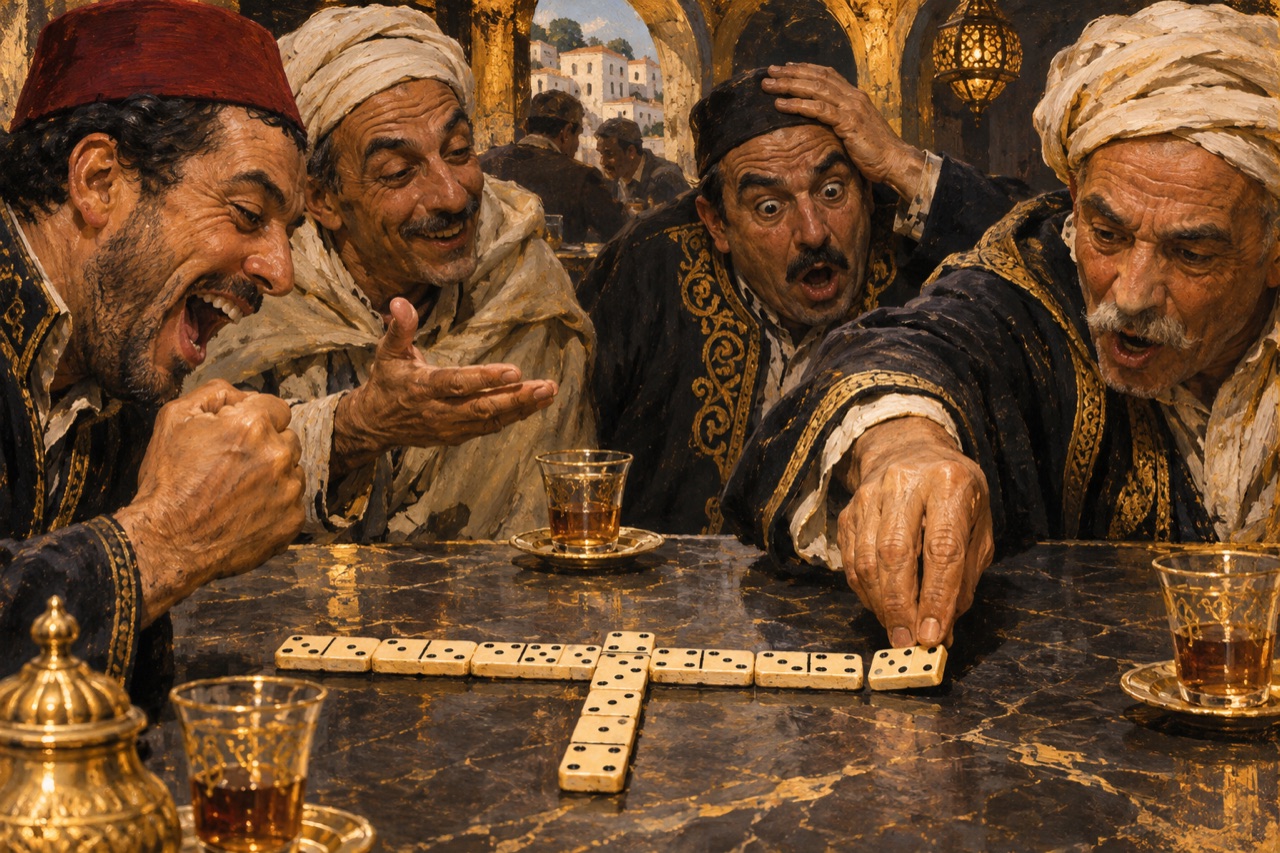
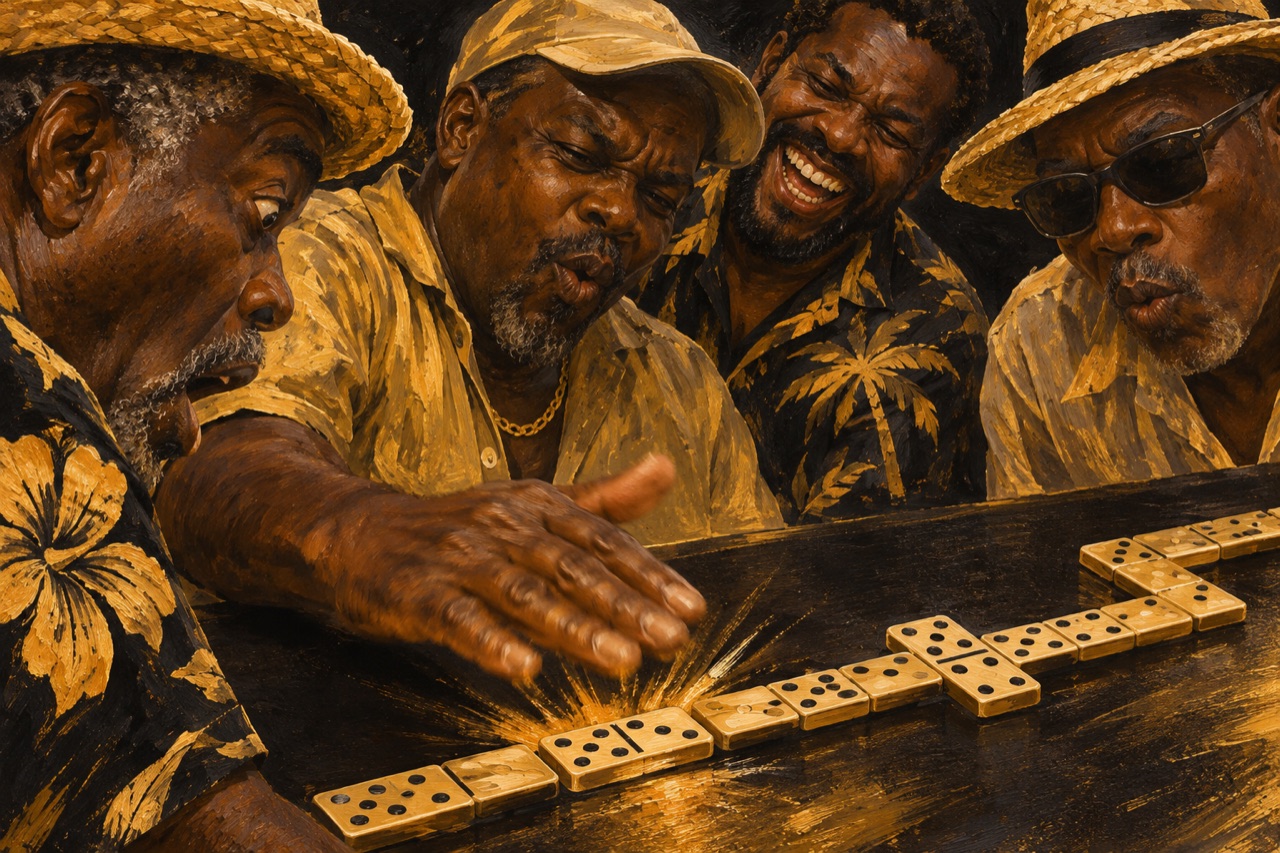
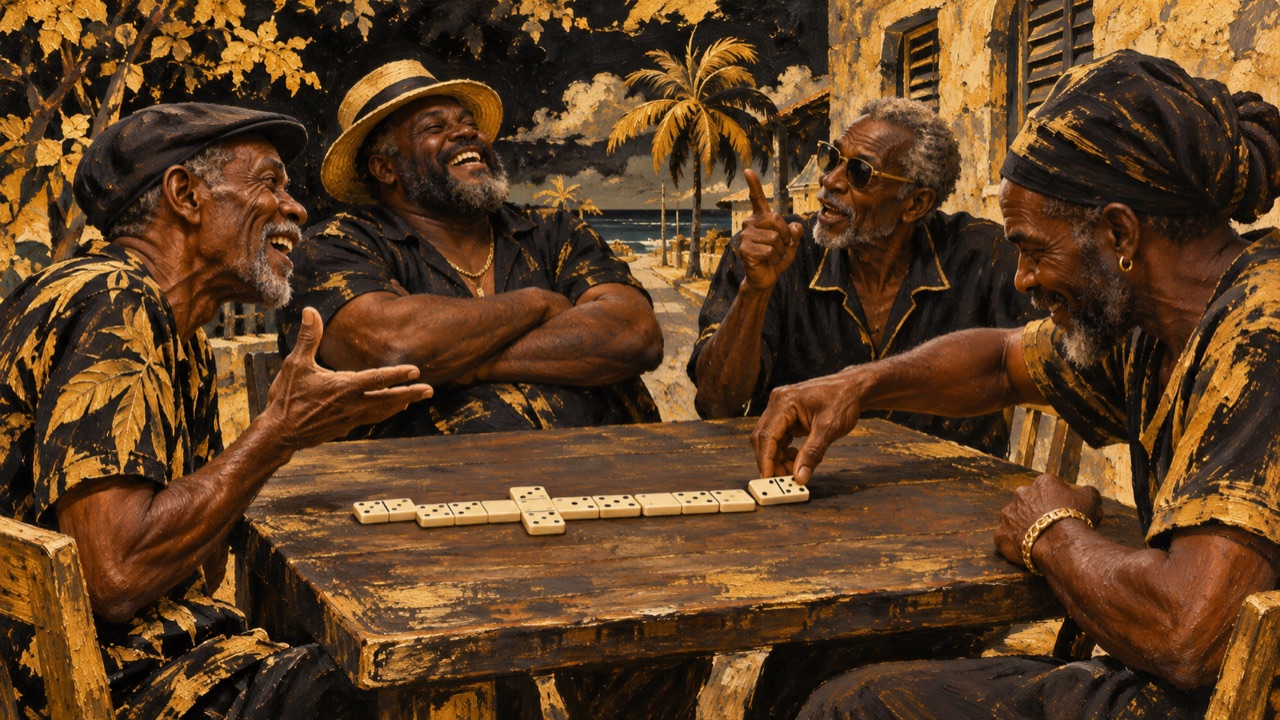
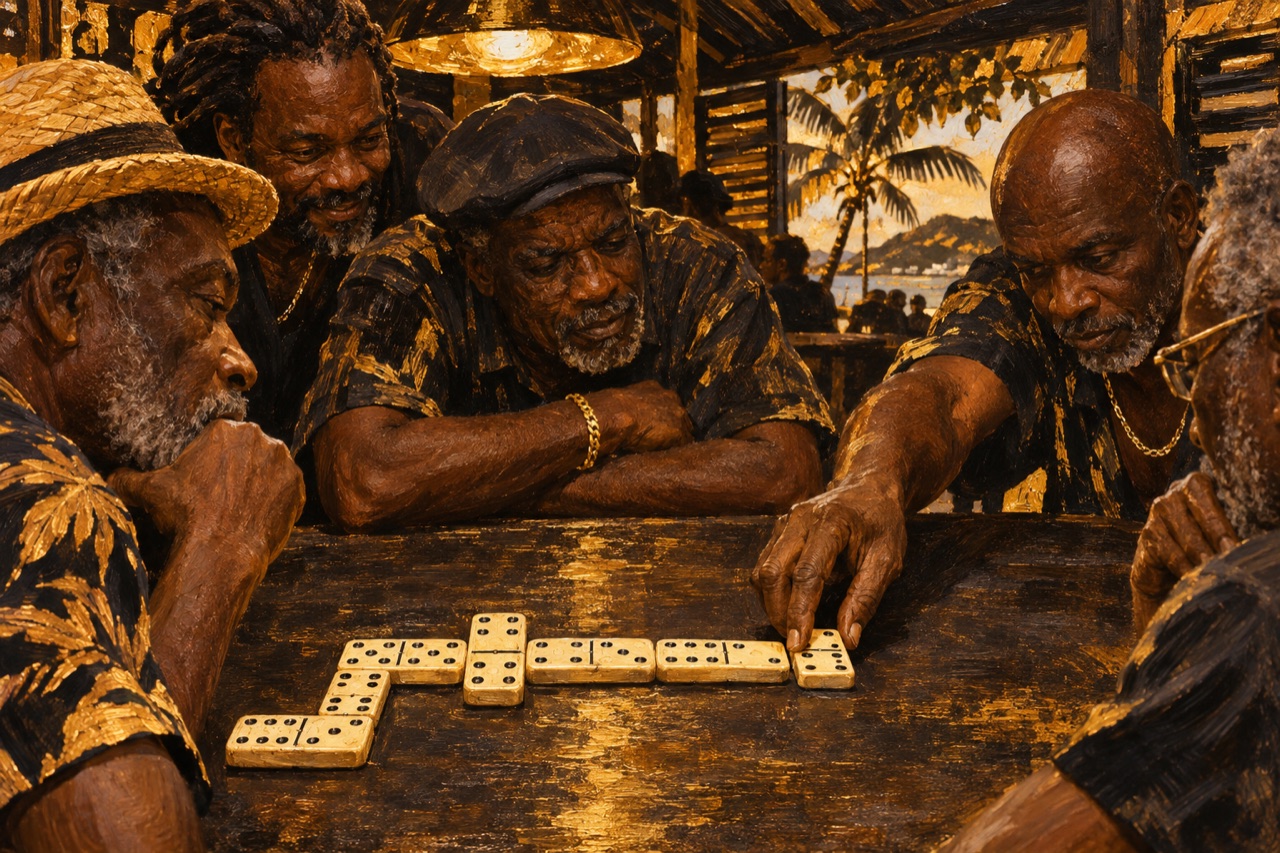
dominoes
In Grenada, a local form of play known as "dominoes" takes shape as a competitive pathway toward regional representation, where tiles, memory, and local representation together constitute the game. Domestic winners advance to regional tournaments, and during matches the core contest is players reading their own hands against the tiles already played. Reporting in a local paper named male participants, there is documented long-term voluntary involvement in competition and officiating, and players with 25 years of experience have been identified.
What becomes a game is specific: the physical tiles, the individual skill of memorizing and recalling tile combinations, and the role of representing a locality combine to produce competitive play. How it is made involves domestic champions bringing honed techniques to regional events and the practice, during play, of interpreting one’s hand in light of previously played tiles; these behaviors structure rules and tactics. The attractions documented are the depth produced by accumulated skill, the responsibility tied to representing a community, and the precision developed through repeated play.
The case is marked by named male participants in local reporting and by long-standing voluntary competition and refereeing activity. These elements show an interplay of event organization and individual mastery that underpins the local competitive culture; the account here is limited to the documented facts.