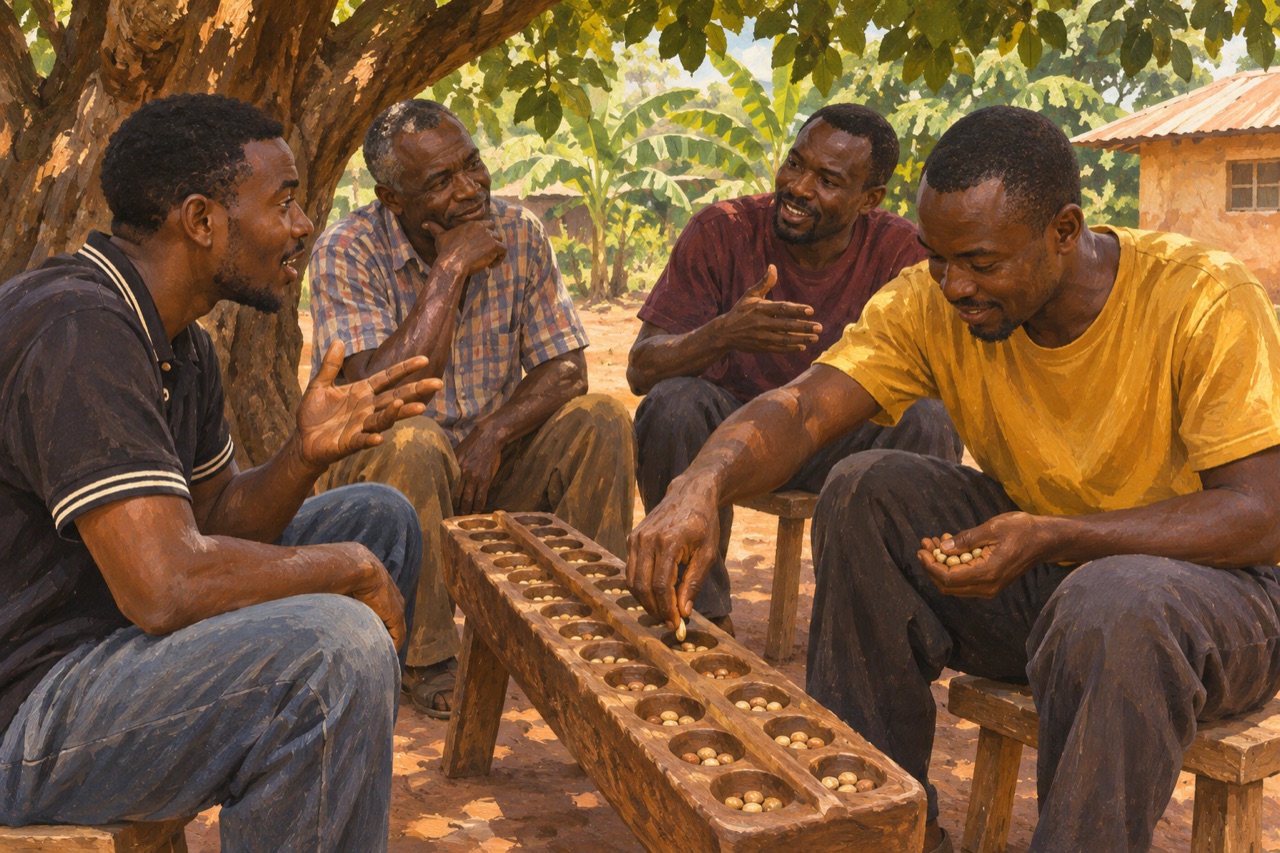
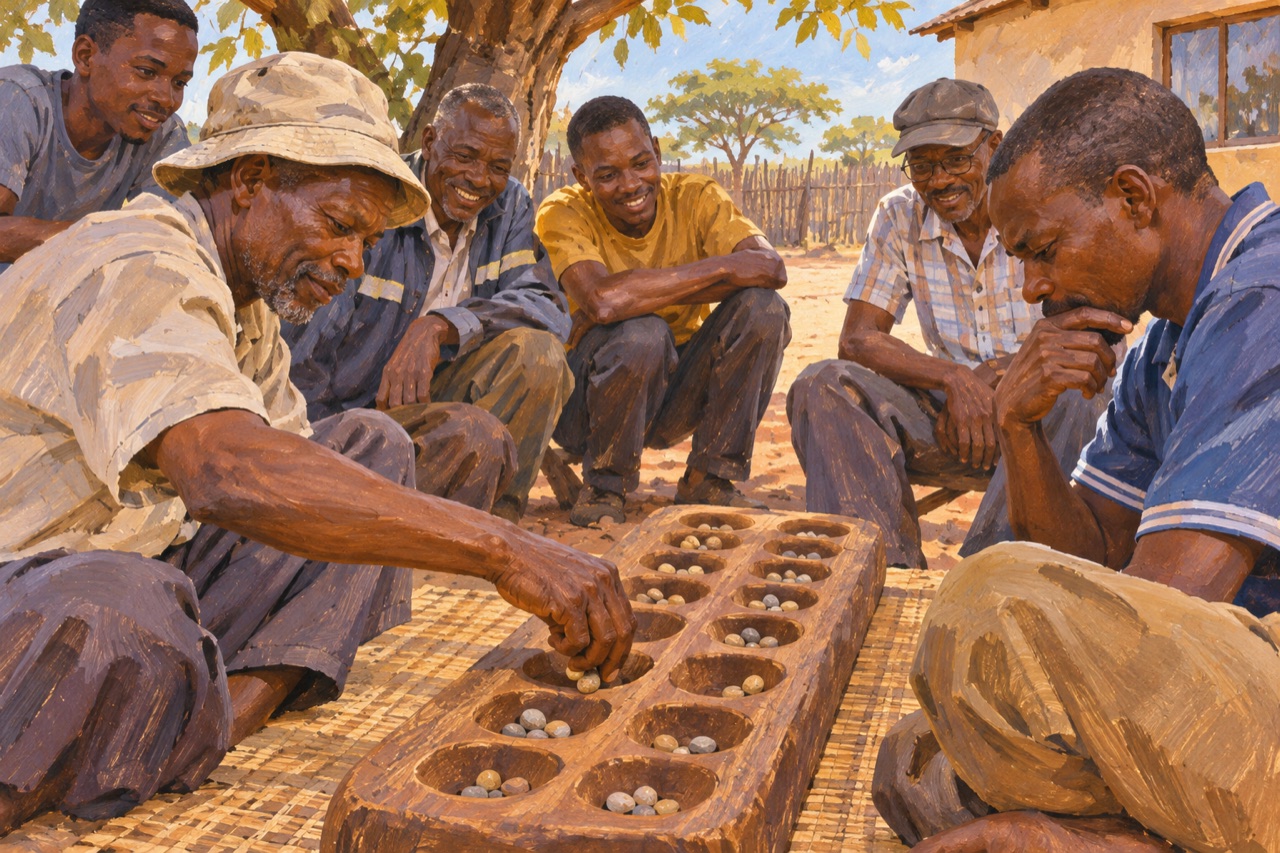
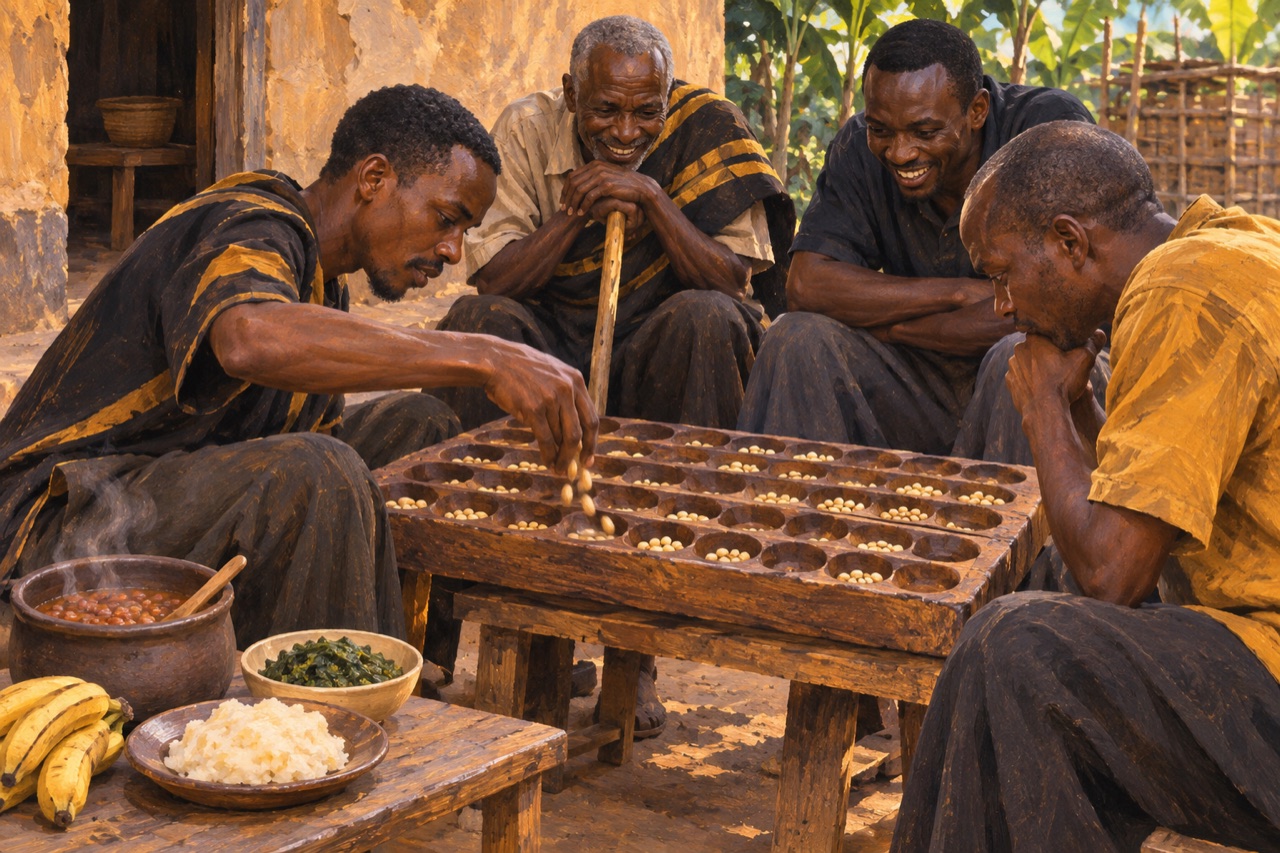
owela
In Namibia, the traditional board game known locally as owela — a mancala-type board using holes and seeds — was transformed into a coin-operated machine intended for leisure venues. Young inventor Justus Iikukutu modified the seed-distribution-and-capture board while preserving the elements of holes, seed movement and capture, and the counting/score mechanics, and incorporated these into a mechanical device that allows play in response to coin insertion. What becomes the game is the arrangement of holes, the movement and capture of seeds, the calculative scoring, and the physical alterations that control those processes. The documented attractions are the calculative elements, the role of cultural transmission of play, and the act of modifying the play object itself. The conversion was undertaken voluntarily by the inventor and deployed in entertainment facilities.