طاولة الزهر / backgammon
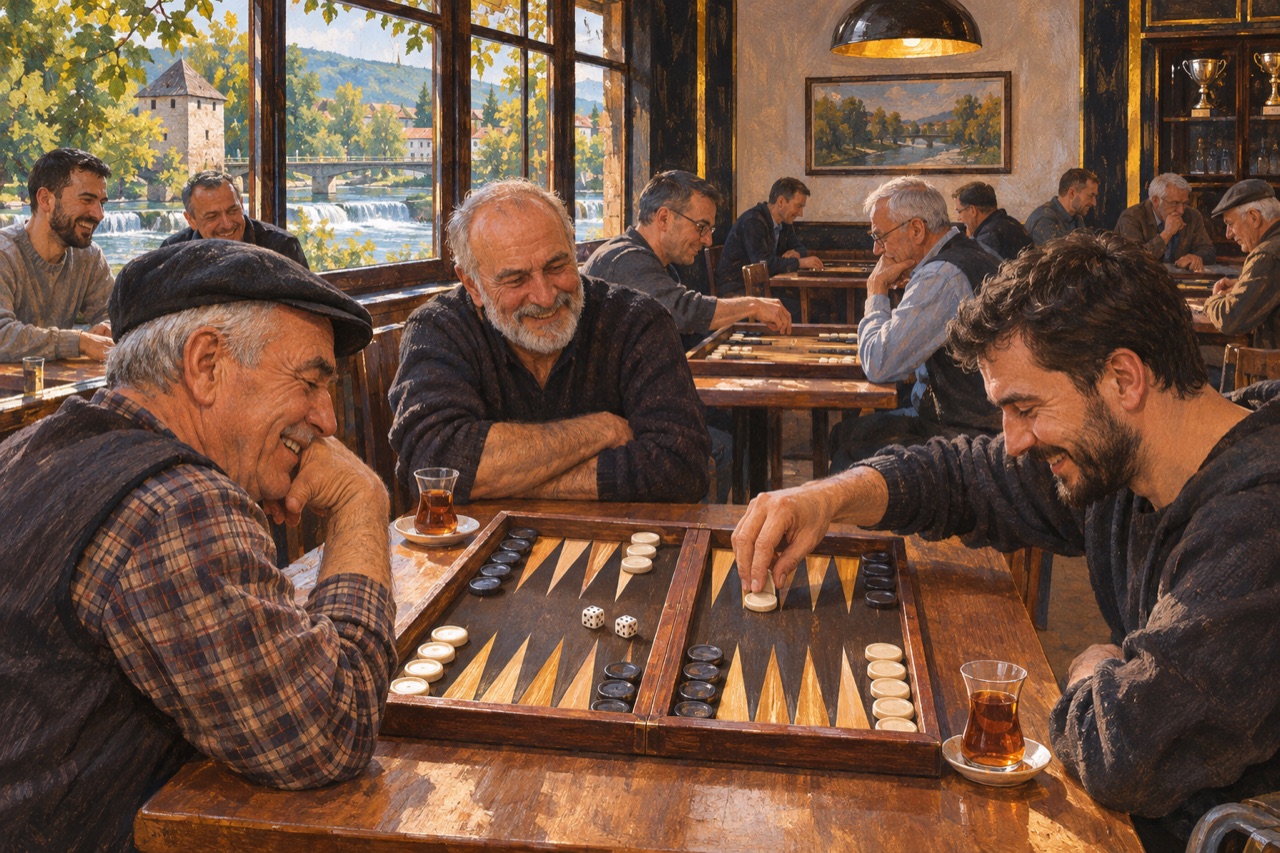
At a corner table at al-Rawda café in Damascus sits a طاولة الزهر / backgammon board. A documentary journalist observed the scene in December 2025: retired Faisal Azzouz seated with longtime friends, playing with dice and pieces. According to his own account, he has played backgammon, chess, and cards at this café for forty years. What constitutes the game here is not limited to board, dice, and pieces but includes the repetitive daily practice, the network of friends, and the accumulation of memories tied to the table. Play is not only about isolated wins or losses; it is sustained as an habitual activity built through decades of repetition. Games shift when chess or card hands are mixed into the sequence, so individual rounds vary, but the place and the familiar faces provide a relative continuity. In a city that has changed around them, this table marks a stable point of belonging. The journalist’s presence records the scene; the verifiable claim from Faisal is that he has kept gathering at al-Rawda to roll dice and move pieces for forty years. From that fact one can see how the elements of play combine with routine, memory, and social ties to make a lasting form of men's play.