طاولة الزهر (tawla)
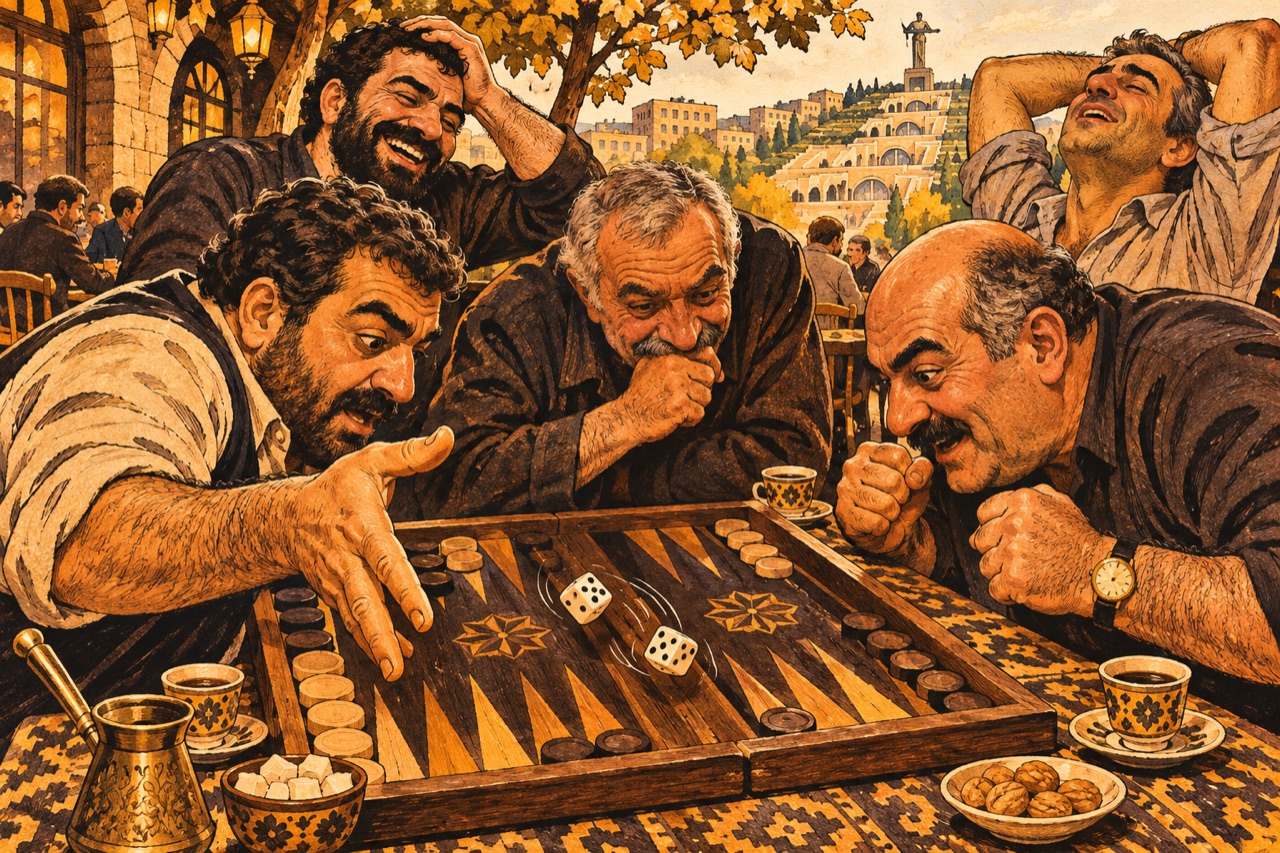
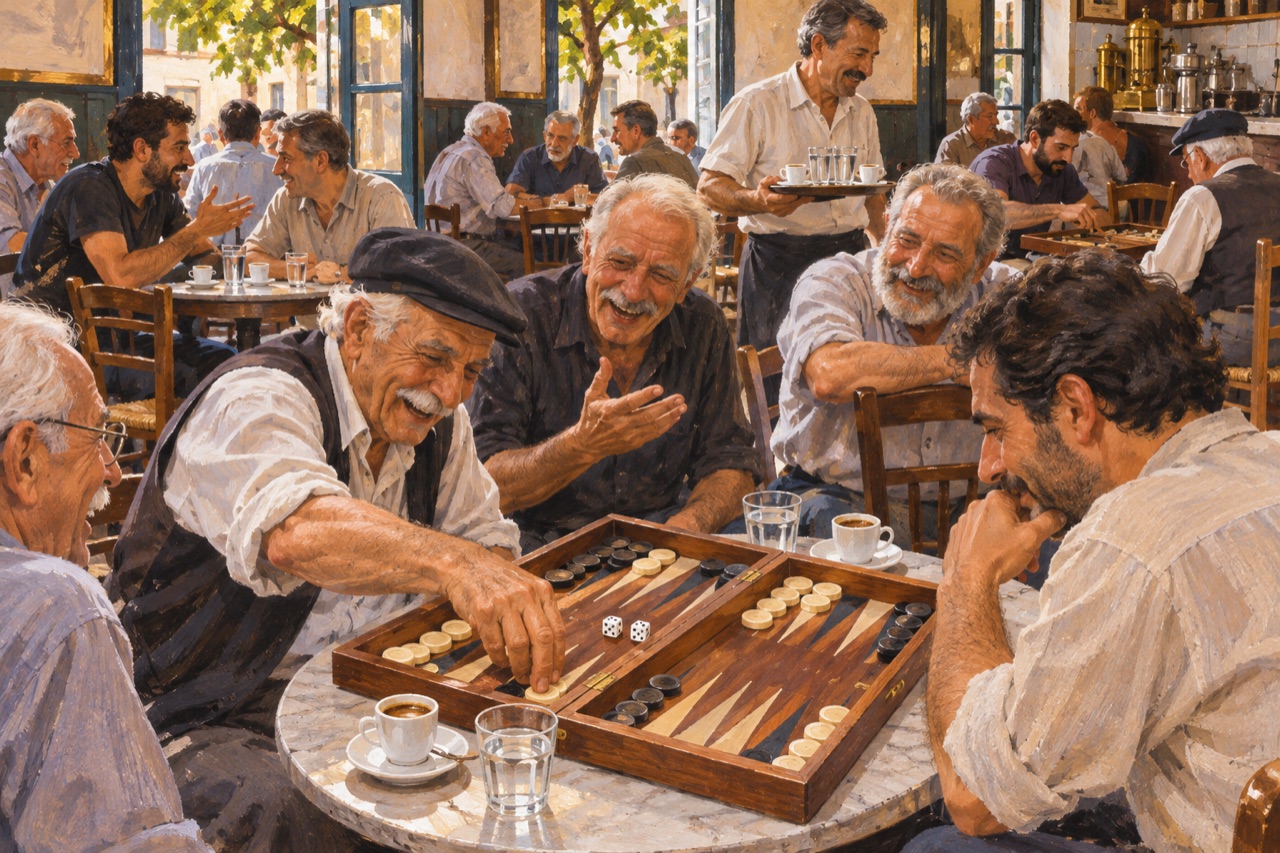
In Lebanon the local game known as طاولة الزهر (tawla) appears in daily life as a board contest built around dice, pieces, luck, and calculation. The game itself consists of dice and pieces, with outcomes determined by a mixture of chance and players’ calculations.
How this becomes a game is straightforward: neighbors and café companions open the board each day and contest one another in luck, skill, and provocation. Participation is voluntary and recurring; field evidence documents players bringing their own boards to play every evening or during leisure time, indicating deliberate, repeat engagement. Attractors recorded in documentation include long-standing partners and sobriquets attached to boards or players, teasing exchanges, and the appeal of calculation.
On the composition of participants, local reporting verified interviews with two men in their 60s, a man in his 50s, and younger men, showing a male-dominated practice in observed settings. The most recent field reporting noted here took place in 2023. Taken together, these concrete, place-specific details — the Lebanese local name, the everyday settings, the actual participants, and the distinctive blend of chance, calculation, and social provocation — make this an independent cultural case worth reading alongside broader articles on similar board games.