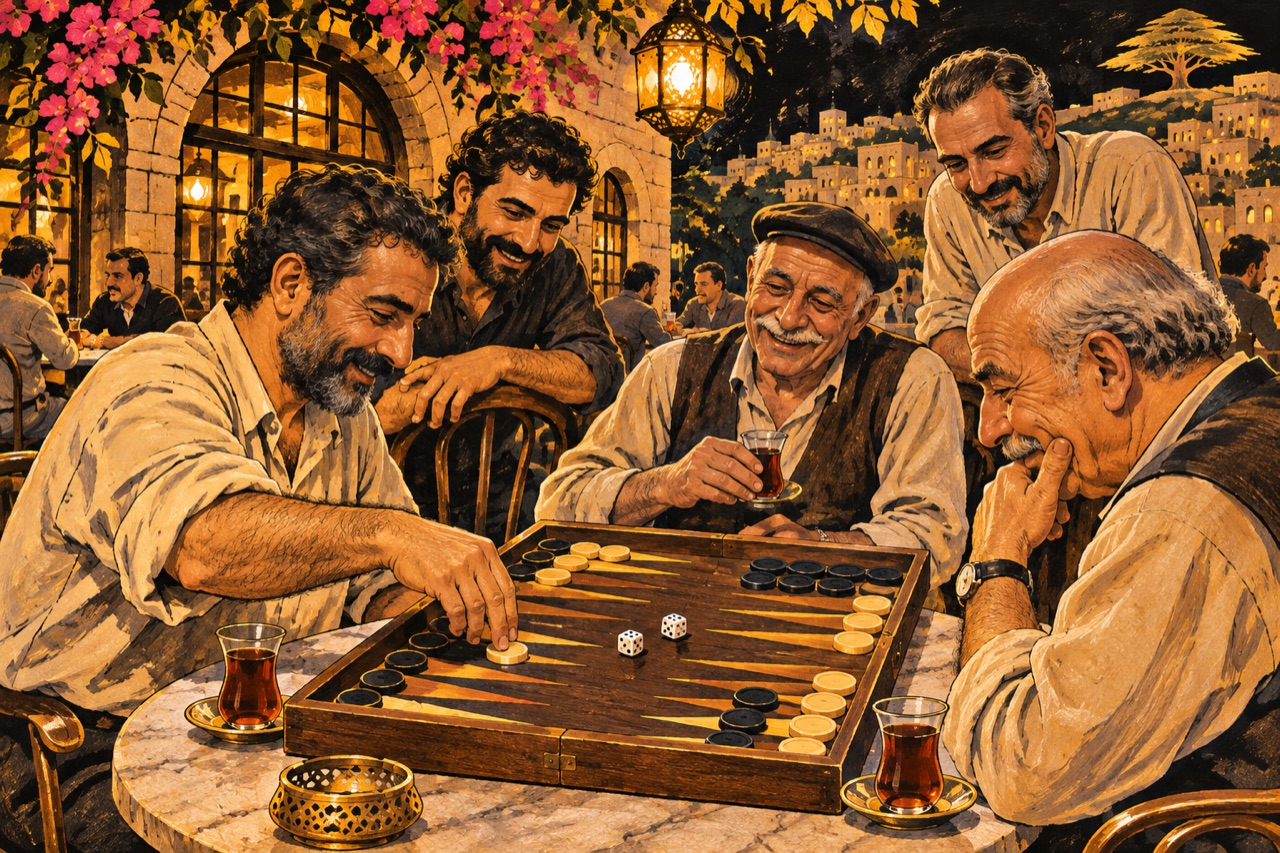
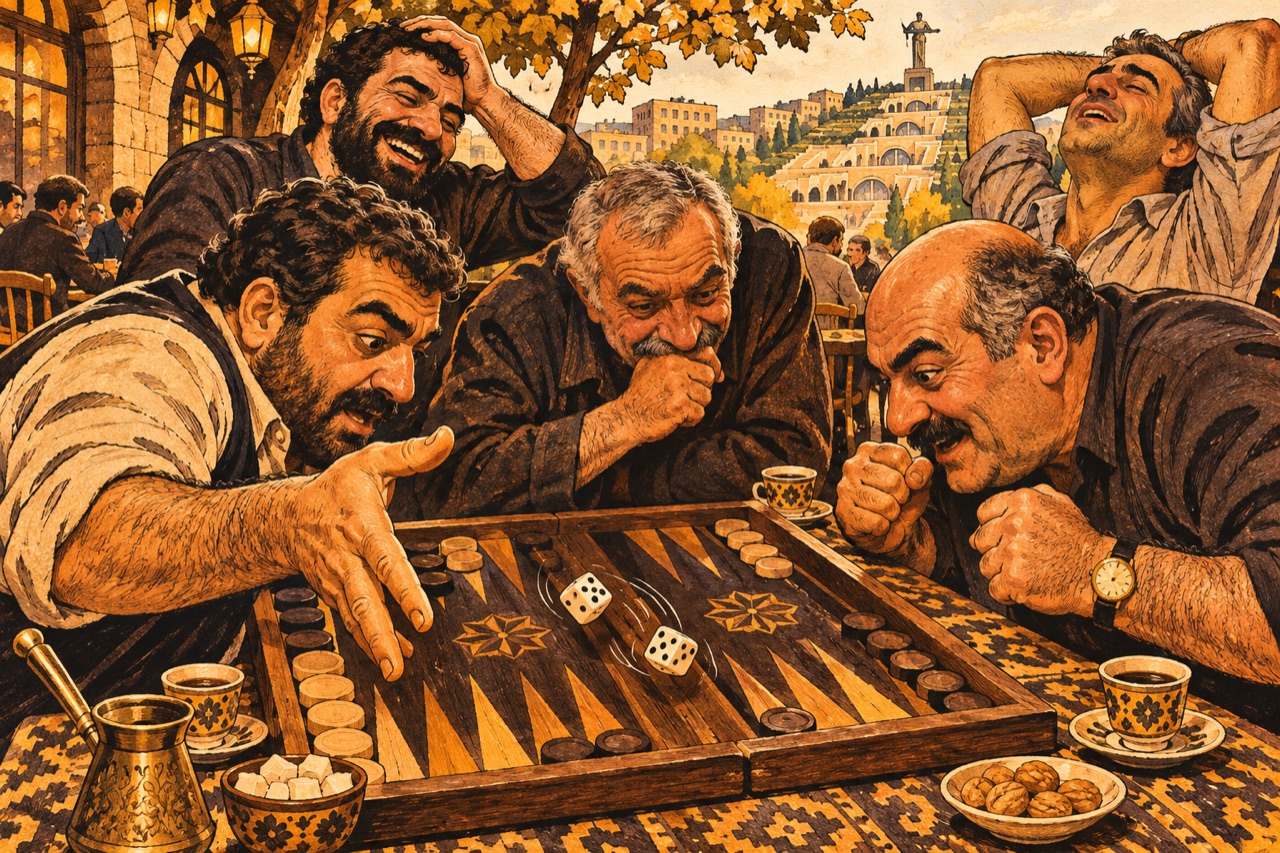
τάβλι / tavli
In traditional Athenian kafeneio, the same scene plays out day after day. Cards and tavli are dealt across the tables, and small contests begin again and again. What is being gamified here is not only points or winning: snippets of time, exchanges with companions, and one’s place in the group become part of the play. Regulars, away from work and family, repeat the same jokes and the same gestures to reassure themselves. The games unfold with a natural rhythm; laughter, tongue-clicks, and gentle teasing recur, each repetition knitting the group closer together. No one truly sulks—losses quickly turn into good-natured banter. Those repeated moments are what bring the men back to their seats. The kafeneio’s atmosphere is neither arena nor dojo, but a setting for affirming one another’s presence, where familiar moves and the exchange of teasing are the everyday ritual.
Repeated play does more than occupy time: it constructs the framework of relationships. By sharing the same gestures and stock phrases over and over, participants come to anticipate one another’s actions, and that very anticipation produces a sense of ease. The line between spectator and player blurs as those at neighboring tables watch and respond; observers become part of the play through their vocal reactions and expressions, shading or even steering the flow. This circulation of watching and responding is a key component of the café’s collective rhythm. Laughter and teasing fill gaps, and brief silences or tongue-clicks cue the next move. These recurring elements, repeated daily, generate new wins and losses while simultaneously reproducing an unchanging social order and the affirmation of everyone’s place.
Sources
- https://armenpress.am/hy/article/660959
- https://en.globes.co.il/news/article.aspx?did=1001183075
- https://www.alaraby.co.uk/society/%D8%B7%D8%A7%D9%88%D9%84%D8%A9-%D8%A7%D9%84%D8%B2%D9%87%D8%B1-%D8%B1%D9%81%D9%8A%D9%82%D8%A9-%D9%83%D8%A8%D8%A7%D8%B1-%D8%A7%D9%84%D8%B3%D9%86-%D9%81%D9%8A-%D9%84%D8%A8%D9%86%D8%A7%D9%86
- https://www.ekathimerini.com/culture/156162/not-just-a-place-to-drink-coffee/
- https://xeber.azeri.net/maraqli/azerbaycan-cay-medeniyyeti-armudu-stekan-lenkeran-cayi-murebbeler-ve-cayxana-enenesi
- https://www.rtvusk.ba/clanak/poslijepodne-uz-rtv-usk-gosti-sanin-begatovic-i-suad-kurjakovic-sula/17617
- https://iamsport.ro/fotbal/inedit/turneul-national-de-table-bucuresti-2025-deschis-de-un-meci-stucan-vs-prunea-la-iamsport-live-spiritele-s-au-incins-id39579.html
- https://www.crisloid.com/product/classic-black-tournament-attache-backgammon/